
WORKS
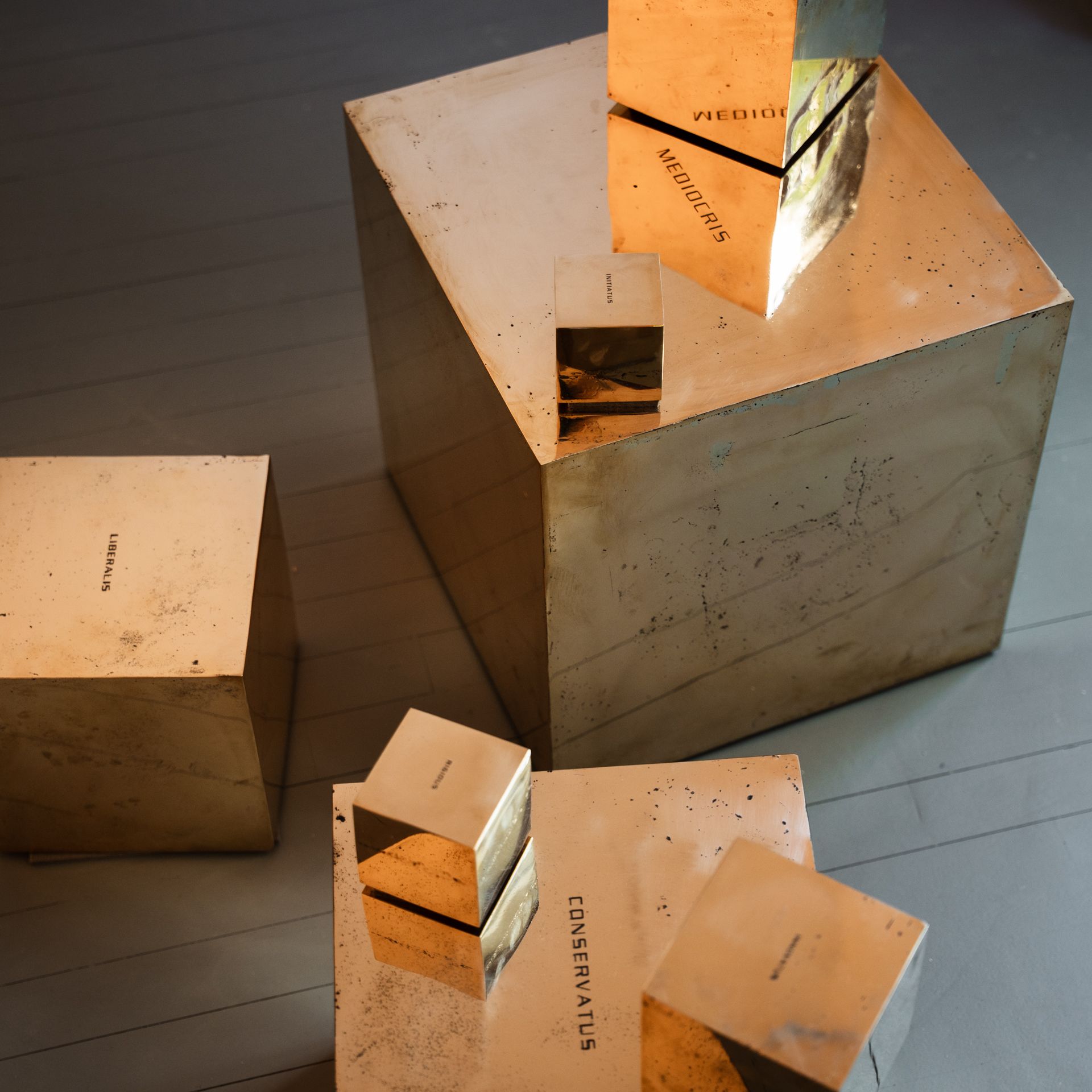
Patricia Strickland | PHI – Macro Level | 2025 | Sieben polierte Würfel aus Bronzeguss, graviert
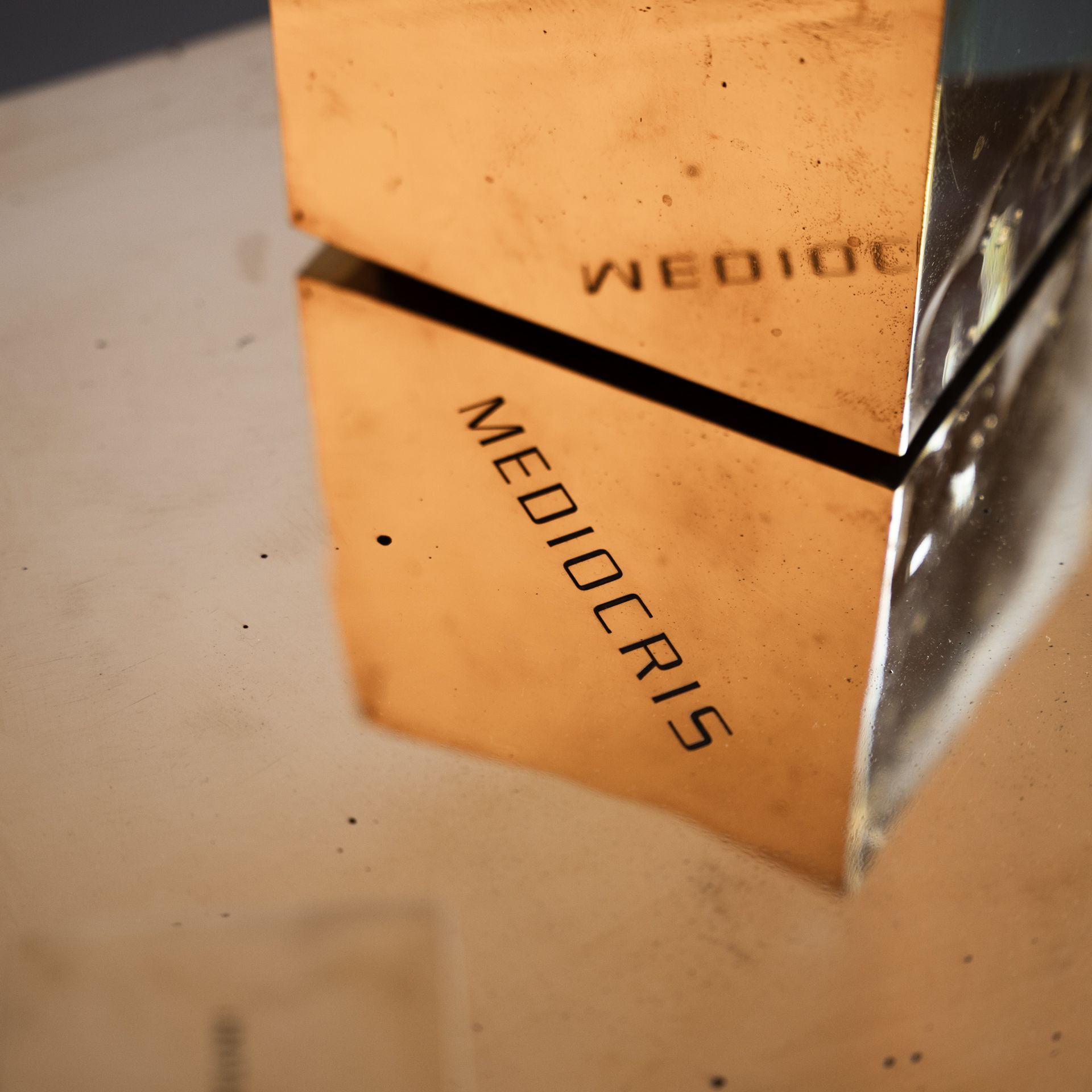
Patricia Strickland | PHI – Macro Level | 2025 | Sieben polierte Würfel aus Bronzeguss, graviert
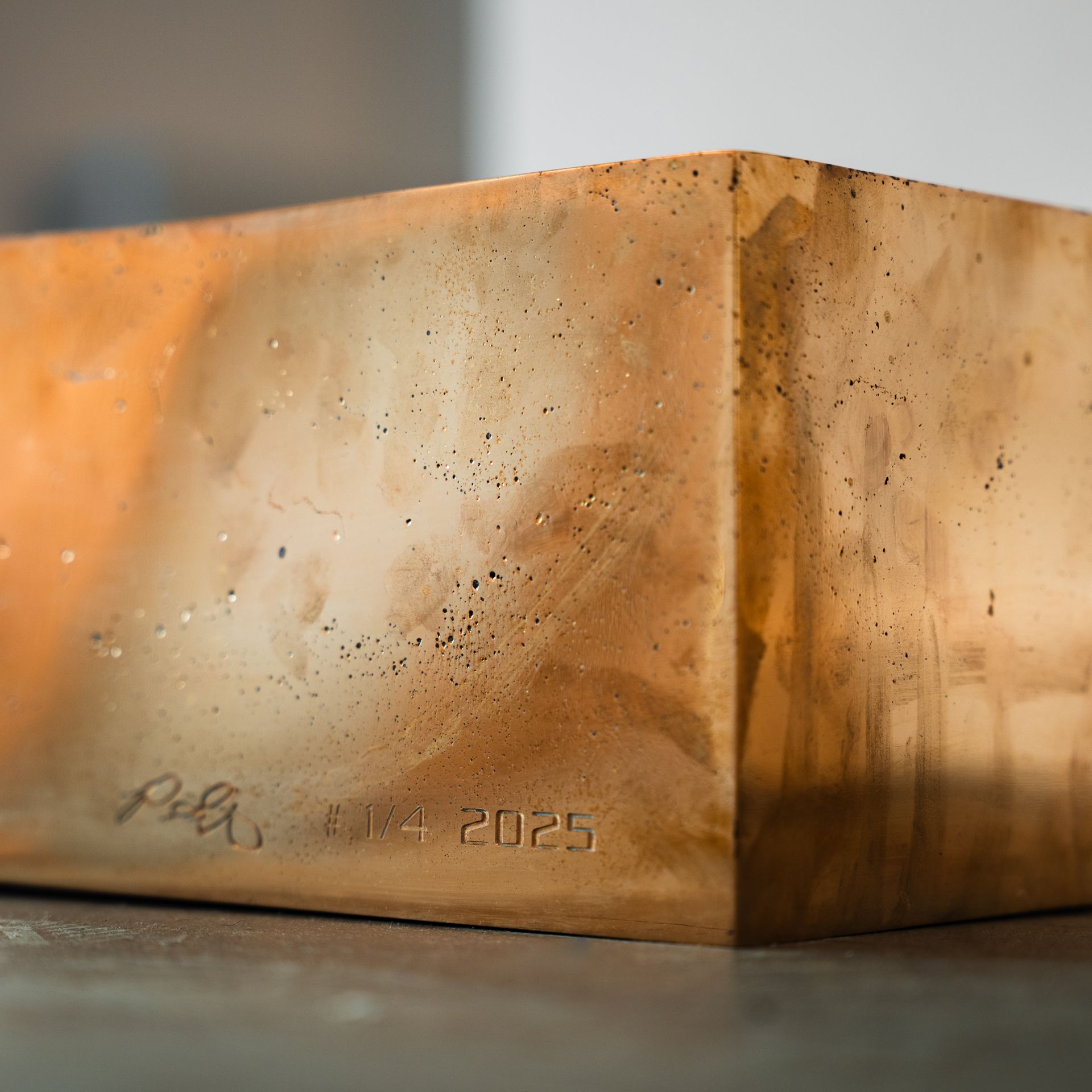
Patricia Strickland | Soap Box | 2025 | Sockel aus Bronzeguss, poliert, graviert | 60 x 60 x 15 cm
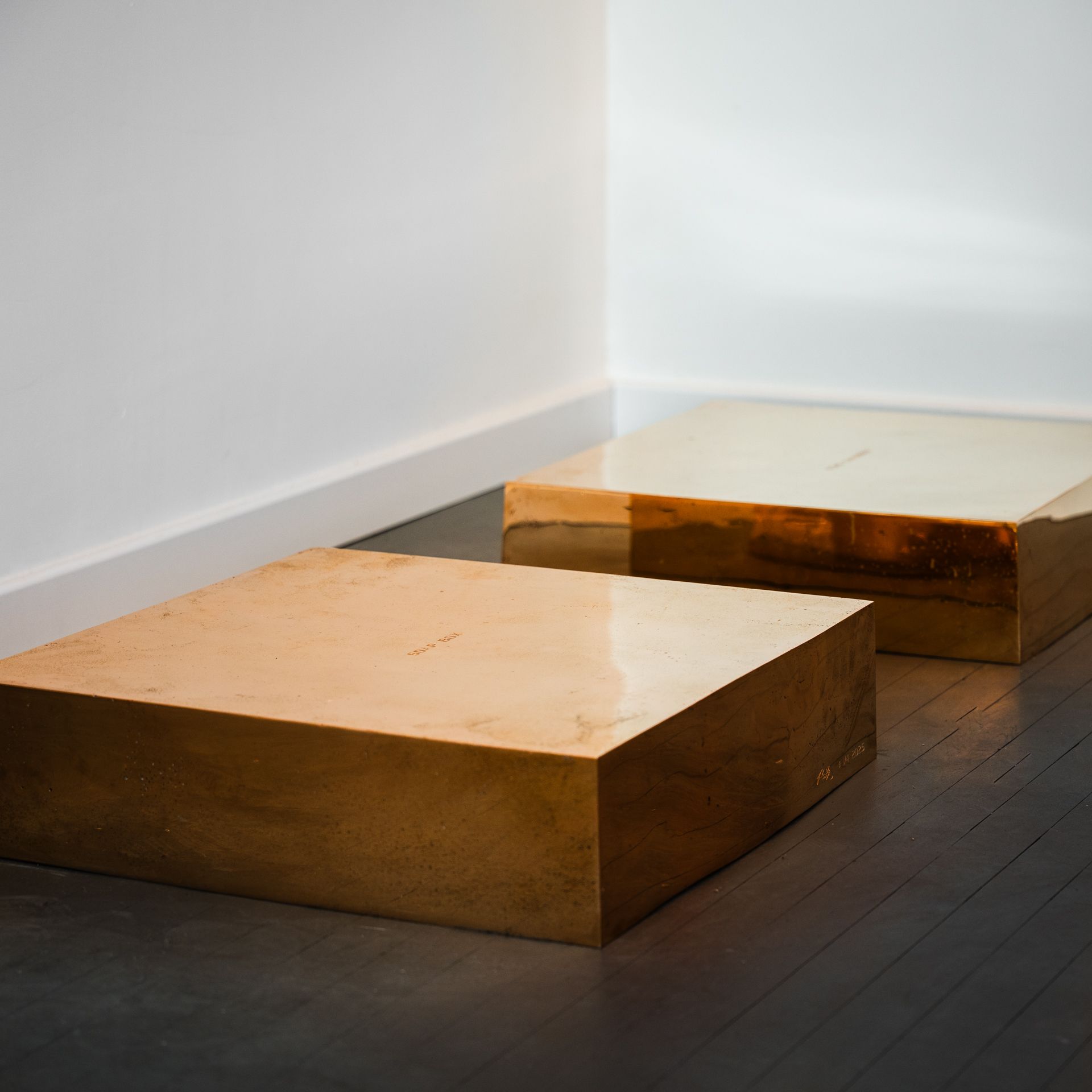
Patricia Strickland | Soap Box | 2025 | Sockel aus Bronzeguss, poliert, graviert | 60 x 60 x 15 cm
ARTIST Info
Patricia Strickland
Patricia Strickland (b. 1964, Mannheim) is a German-American artist whose practice is shaped by a life lived between cultural, geographic, and psychological thresholds. Raised between Dallas, Heidelberg, San Francisco, and Mannheim, and later working across cities such as Paris, London, Los Angeles, and Monaco, Strickland developed an early independence that continues to inform her artistic inquiry.
Strickland’s work is grounded in a nuanced and deeply reflective engagement with the conditions of human experience. Central to her practice is the question of how values are formed, mediated, and perceived; particularly in light of life’s inherent condition: the coexistence of opposing forces. Moments of transformation, contradiction, and self-realization serve as both the conceptual foundation and driving force of her work.
This inquiry finds a compelling formal articulation in her Frequency Lines series, in which ephemeral acoustic experiences are translated into precise visual objects. Selected sound sequences are analyzed in terms of their dynamic amplitude over time, analogous to a graphic equalizer, and subsequently rendered through waterjet cutting into materials such as aluminum or marble. In this process, immaterial phenomena are given lasting physical form, bridging sensory perception and sculptural presence.
Strickland’s broader body of work further explores the construction of the self, particularly the individual’s negotiation of freedom, change, and self-awareness. Employing refined materials such as pure white marble and highly polished metals, her works initially present a cool, almost detached aesthetic. This apparent formal clarity, however, operates as an entry point: it invites engagement while subtly guiding the viewer toward a more introspective encounter. What follows is a gradual, often unconscious identification with layered impressions, visual, auditory, and psychological, that reflect the fluidity of personal truth.
Her artistic language emerges less from academic training – despite studies at the Academy of Fine Arts in Munich, the California College of the Arts in San Francisco, and Central Saint Martins in London – than from the formative tensions of a life lived across disparate environments. These spatial and cultural dichotomies underpin her work, generating a visual and conceptual vocabulary attuned to contrast, rhythm, and resonance. As Strickland herself notes, each idea arises from the accumulated impressions of the places that have shaped her – sites whose energies continue to reverberate within her practice.
In Strickland’s work, aesthetic experience becomes a site of inquiry: a space in which viewers are invited to confront not only external structures of meaning, but also the shifting contours of their own perception.